
Stress is an inevitable part of our everyday lives. A little bit can be positive, but too much stress takes a toll on the body and mind.
The goal isn’t to eliminate stress (that would be impossible) but rather to reduce it where possible and take time to recover from the stressors of daily life.
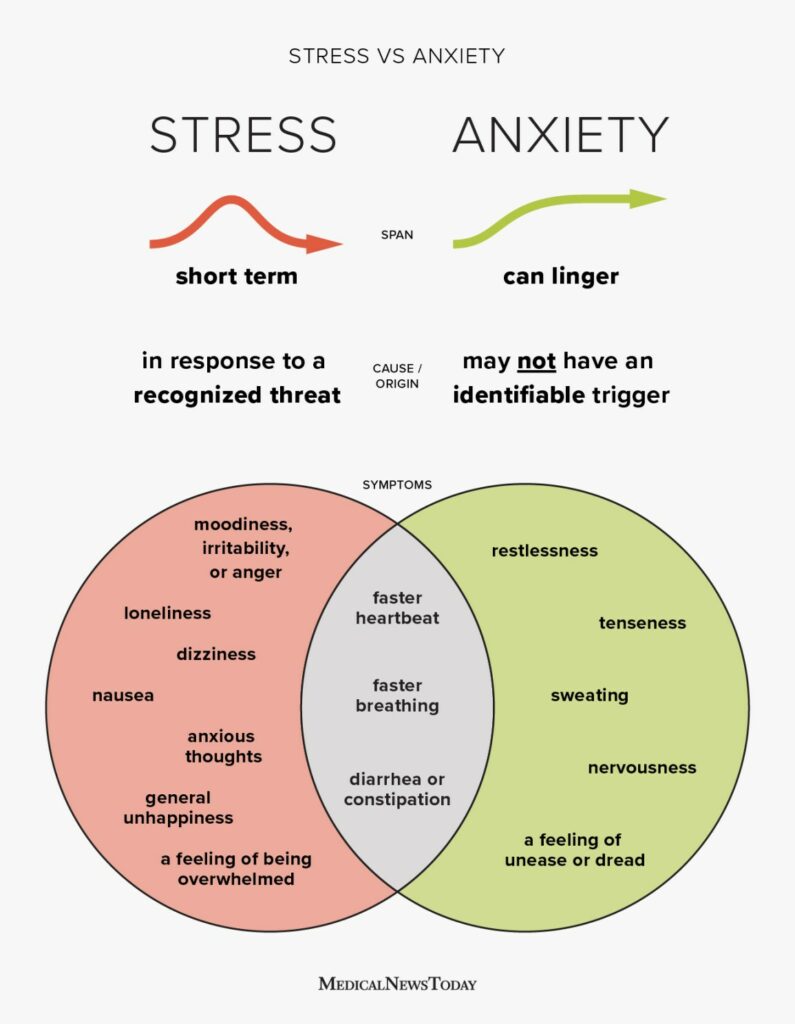
Stress versus Anxiety
The Importance of Stress Management
Our bodies react to physical and mental strain that is potentially health threatening by activating interconnected neuroendocrine circuits. This response allows our bodies to face and deal with the challenge, whereafter natural balance is restored. If we perceive a threatening stimulus as too intense or its duration as too long, we may fail coping with it. In this care, the body’s stress response does not resolve into a state of natural balance, neurological and endocrinal parameters remain altered, and illness may ensue.
Stress has both a physical (objective) and a psychological (subjective) component. The psychological effects depend on an individual’s perception of the predictability and controllability of the stressor. Therefore, the way we anticipate a stressor and then control it, largely defines the resulting stress response. That is, how quickly and efficiently the stress response is activated and subsequently turned off to restore equilibrium.
In situations where the stressor is overwhelming and cannot be resolved, stress becomes chronic. In this case, the negative feedback mechanism that ensues that balance is restored after a stress response, does not work. As a result, the molecular mediators of stress remain high, which compromises the immune system.
The Effect of Chronic Stress on Brain Structure
Chronic stress has been linked to changes in certain areas of the brain. The physical changes that occur are similar to those found in the brains of depressed patients examined post-mortem, suggesting that it may be the basis of the depressive disorders that are often associated with chronic stress. These changes to the brain can expand to other functionally connected areas, and potentially cause those cognitive, emotional, and behavioural dysfunctions that are commonly associated with chronic stress, and that may increase vulnerability.
The Effect of Chronic Stress on Brain-Skeletal Muscle Communication
Proinflammatory cytokines induced by stress are involved in the development of chronic-stress associated depression. The short-term response to stress implies so-called sickness behaviour that includes symptoms similar to those typical of depressive disorders, for example, social withdrawal, decreased physical activity, fatigue, somnolence, mood, and cognitive alterations. This adaptive response is orchestrated by cytokines in an attempt to divert an individual from normal activities to save energy. As a result, it facilitated a reaction against the challenge and the subsequent recovery.
In the case of chronic inflammation that may set in with prolonged stress, the persistent cytokine signalling in the brain prevents the resolution of ‘sickness’ that may consequently degenerate into depression.
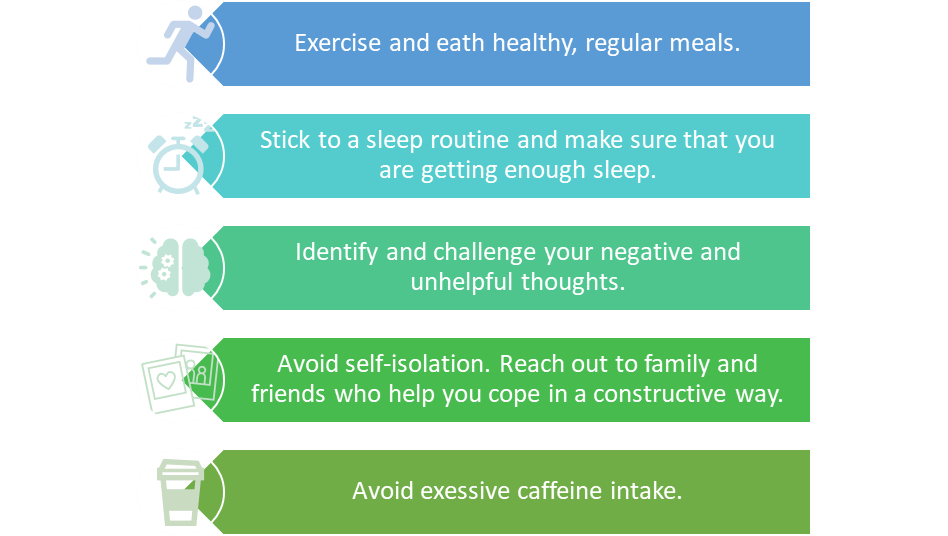
Coping with Stress and Anxiety
Recognise When You Need More Help
If you are struggling to cope, or the symptoms of your stress or anxiety won’t go away, it may be time to talk to a professional. Psychotherapy and medication are the two main treatments for anxiety, and many people benefit from a combination of the two.
If you or someone you know has a mental illness, is struggling emotionally, or has concerns about their mental health, there are ways to get help.
Remember: Chronic stress is something many people experience, but it doesn’t mean you have to slog through it, and certainly not alone. The sooner you get care and prioritize your own healing, the sooner you can feel more like yourself.